

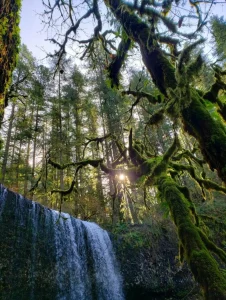
When people search for things to do near Salem Oregon, Silver Falls State Park often appears as a must-see destination.
It is frequently described as home to some of the most beautiful Oregon waterfalls, but that description barely scratches the surface of what makes this park special.
Silver Falls is not a place you visit for a single photo and move on. It is a forested landscape of interconnected trails, shifting light, and multiple waterfalls that reveal themselves gradually as you walk.
To truly experience it, you need to plan not just where you will go, but how you will move through it.
A Forest First, Waterfall Second Experience
Unlike waterfall destinations built around roadside viewpoints or short boardwalks, Silver Falls is fundamentally a trail park.
Yes, the waterfalls are spectacular. But they exist within a larger environment of mossy forests, fern-lined paths, and cool, shaded ravines.
You do not arrive, step out of the car, and see everything at once. You earn each waterfall by walking through the forest that connects them.
This is what makes Silver Falls so different from single-viewpoint waterfall stops. The experience is immersive rather than instant.
Understanding the Scale of Silver Falls
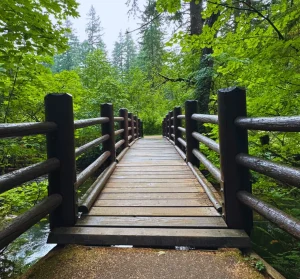
Silver Falls State Park features more than one waterfall, more than one trail, and more than one way to experience it.
The park’s most famous route, the Trail of Ten Falls, weaves through a network of paths that pass behind, beside, and above multiple waterfalls. Some plunge dramatically from cliff edges. Others cascade softly through narrow channels.
Because of this scale, planning your visit is less about choosing a single sight and more about choosing a route that matches your time, fitness level, and interests.
Seasonal Flow Changes Everything
One of the most important factors when planning a visit to Silver Falls is understanding how water flow changes throughout the year.
Winter and early spring bring the most powerful displays. Rain and snowmelt feed the falls, turning them into roaring columns of water. This is when Silver Falls feels most dramatic and wild.
Late spring and early summer still offer strong flows but with milder weather and improved trail conditions. These months often provide the best balance between beauty and comfort.
By late summer, some waterfalls reduce to gentler streams. While still beautiful, the experience becomes more about the forest and trail than about raw water power.
Autumn introduces softer light and fewer crowds, though water levels may be lower depending on rainfall.
Choosing when to go should depend on whether you prioritize water volume, trail conditions, or solitude.
Weather Shapes the Trail Experience
Silver Falls is not just affected by seasonal flow. Weather plays a direct role in how the trails feel.
Rainy days enhance the waterfalls but can make paths muddy and slippery. Dry days make hiking easier but reduce water volume. Cold days bring fewer visitors and a quieter forest, while warm days bring energy and crowds.
Rather than avoiding less-than-perfect weather, many visitors find that Silver Falls is most memorable when conditions are dynamic rather than ideal.
Fog drifting through the trees or rain glistening on leaves can transform the park into something almost cinematic.
Why Route Planning Matters
Because Silver Falls is trail-based, how you move through it matters as much as what you see.
Some visitors opt for short walks to one or two waterfalls. Others commit to longer loops that reveal the full scale of the park. Neither approach is wrong, but they offer very different experiences.
The Trail of Ten Falls loop, for example, allows you to experience multiple waterfalls in one continuous journey, including the rare chance to walk behind several of them. However, it requires time, stamina, and appropriate footwear.
Shorter routes are perfect for visitors with limited time or those who prefer a more relaxed pace.
Knowing your limits and goals before arriving allows you to enjoy the park rather than rushing through it.
A Clear Contrast With Roadside Waterfalls
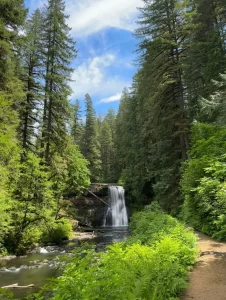
Many Oregon waterfalls are easily accessible from parking lots or short boardwalks. These are beautiful and convenient, but they offer only a snapshot.
Silver Falls offers a story.
You do not just see a waterfall. You follow water through the forest. You watch how it changes shape, sound, and speed. You experience its relationship with rock, moss, and light.
For visitors seeking Oregon waterfalls that feel like an experience rather than a stop, Silver Falls stands apart.
Preparing for a Silver Falls Visit
A successful visit includes:
- Checking recent weather and water conditions
- Choosing routes based on time and ability
- Wearing proper footwear for wet trails
- Allowing extra time to stop and observe
- Arriving early during peak seasons
Silver Falls rewards those who plan thoughtfully rather than rushing in with generic expectations.
Why Silver Falls Is More Than a Destination
Silver Falls is not about ticking off a famous landmark. It is about moving slowly through a living landscape shaped by water and forest.
For travelers looking for things to do near Salem Oregon that offer depth rather than distraction, Silver Falls delivers a layered, immersive experience that lingers long after you leave.
Frequently Asked Questions
How many waterfalls are at Silver Falls?
Silver Falls State Park features multiple waterfalls, with the Trail of Ten Falls passing by several major ones.
What is the best time of year to visit Silver Falls?
Winter and spring offer the strongest flows. Late spring and early summer balance water volume and trail conditions well.
Can you walk behind the waterfalls?
Yes. Several waterfalls at Silver Falls allow visitors to walk behind them along designated trails.
Is Silver Falls suitable for beginners?
Yes. There are routes for all levels, from short walks to longer loops.
How long does it take to hike the Trail of Ten Falls?
Most visitors take between three and five hours depending on pace and stops.